EU Pushes to Let Startups Incorporate in 48 Hours Under New EU Inc. Regime

The European Commission has unveiled EU Inc., a new optional corporate regime designed to let companies incorporate across the EU in just 48 hours, for less than €100, through fully digital procedures. The proposal is aimed at cutting legal complexity, reducing costs, and helping more startups and scaleups grow within Europe.
The European Union wants to make it dramatically easier to start and scale a company across the bloc.
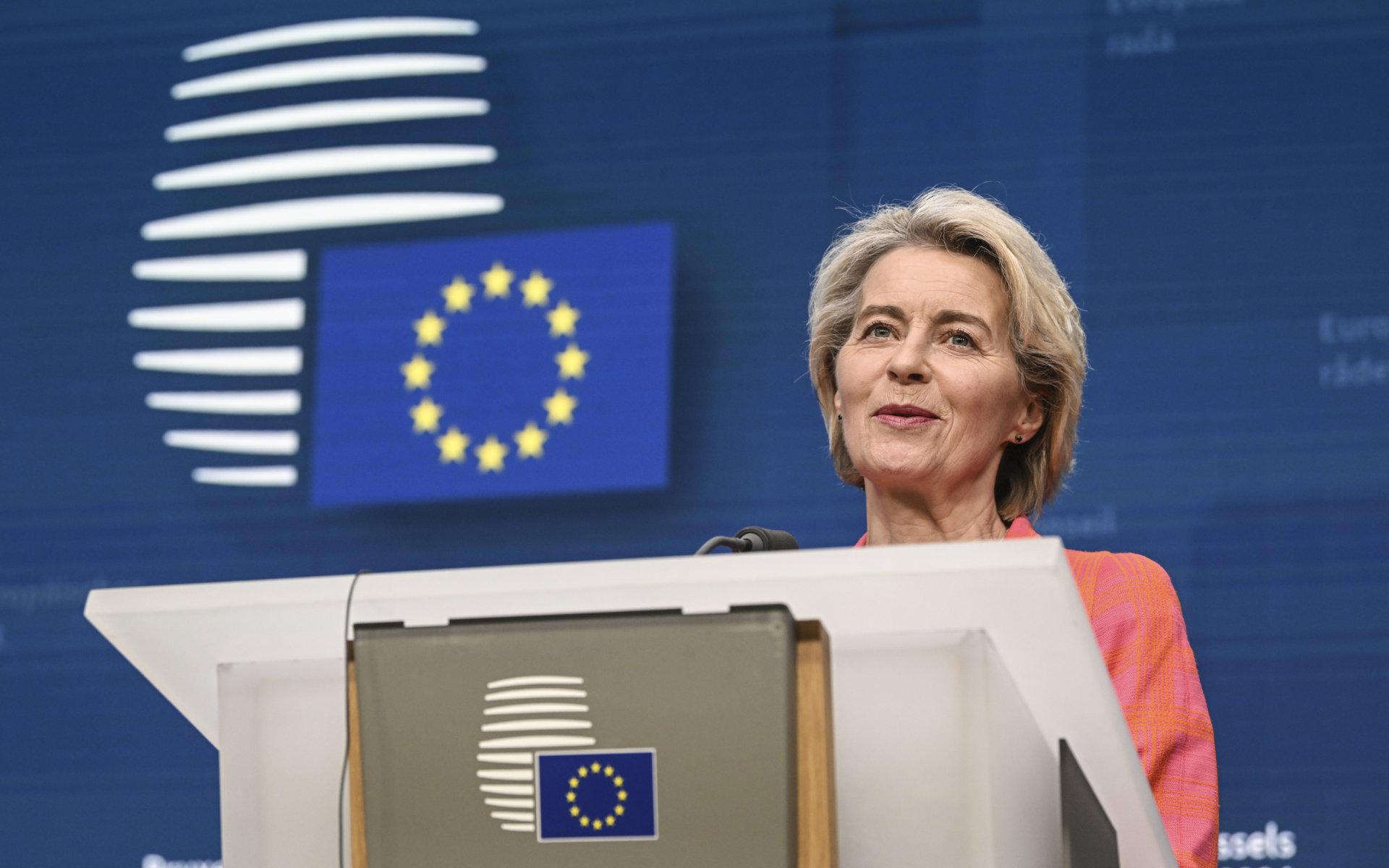
In a proposal presented by the European Commission on March 18, Brussels unveiled EU Inc., a new optional corporate legal framework that would allow businesses to be incorporated in as little as 48 hours, at a cost of under €100, through fully digital procedures. The initiative is part of the Commission’s broader push to reduce friction inside the Single Market and make Europe a more competitive environment for startups, scaleups, and innovation-led companies.
The rationale is clear: despite the promise of a unified European market, founders still face a fragmented legal landscape made up of 27 national legal systems and more than 60 company law forms. According to the Commission, that fragmentation continues to slow company creation, increase compliance costs, and make cross-border expansion unnecessarily difficult for young businesses.
European Commission President Ursula von der Leyen framed the proposal as a direct response to one of Europe’s most persistent scale-up problems. European entrepreneurs who want to grow across borders, she said, still face a maze of national rules and legal structures. With EU Inc., the Commission wants to make it far easier to build and grow a business across Europe under a more coherent framework.
At the heart of the proposal is the creation of a single harmonised EU company regime that businesses could choose voluntarily, without replacing national systems. In other words, EU Inc. would sit alongside domestic legal forms rather than override them. Founders could opt into this EU-wide structure if they want a simpler route to operate across multiple Member States.

One of the most significant changes is procedural. Instead of navigating different legal and administrative channels in each market, companies would be able to register through a single digital interface, based on the once-only principle, meaning information would be submitted once and automatically transmitted to the relevant authorities. The Commission is also planning a future central EU register to support that process.
The ambition goes beyond company incorporation. Brussels wants EU Inc. to apply across the full corporate lifecycle, including capital operations, governance procedures, share transfers, and liquidation, all through digital processes. For startups and growth companies, that matters: speed, legal clarity, and lower administrative drag can be decisive when entering new markets or raising capital.
The proposal also contains investor- and founder-friendly elements that are especially relevant to the startup ecosystem. According to the Commission, the framework is designed to provide greater certainty around financing tools and cross-border investment structures, including support for instruments such as SAFEs (Simple Agreements for Future Equity), which remain widely used in startup financing. It also encourages Member States to open pathways for EU Inc. companies to access regulated public markets.
Another notable measure is the introduction of an optional common EU stock option scheme. Under the proposal, employee stock options granted through this system would generally be taxed only when the shares are eventually sold, rather than before any actual gain is realised. That change is intended to make European startups more competitive in attracting and retaining talent, especially when compared with ecosystems where equity compensation is easier to use.

EU Inc. – making business easier in the European Union
The Commission is also trying to lower the cost of failure — an area where Europe has often lagged more entrepreneurial markets. EU Inc. would introduce fully digital insolvency and winding-up procedures, which could make it easier for founders to shut down an unsuccessful venture efficiently and move on to a new one. In startup ecosystems, that kind of legal flexibility can matter almost as much as ease of formation.
Henna Virkkunen, Executive Vice-President for Tech Sovereignty, has argued that Europe’s internal fragmentation is pushing too many innovators to scale elsewhere. In that sense, EU Inc. is not just a legal reform; it is also a competitiveness play. Brussels is effectively signalling that if Europe wants more high-growth companies to stay, it needs to become easier to build them here in the first place.
The Commission estimates that the new framework could reduce administrative burdens by €328 million to €440 million over ten years. That projected saving helps explain why EU Inc. has quickly become one of the most closely watched business-policy announcements coming out of Brussels this month.
At the same time, the proposal includes safeguards. National labour and social law would continue to apply, and Member States would retain oversight mechanisms intended to prevent fraud or abusive use of the regime. In other words, the Commission is trying to simplify company law without dismantling national protections in other areas.
The legislative process now moves to the European Parliament and the Council, where negotiations will determine the final shape of the regime. The Commission is aiming for political agreement by the end of 2026, positioning EU Inc. as a central pillar of its broader “28th regime” strategy for European companies.
If adopted in a strong form, EU Inc. could mark one of the most consequential recent attempts to make the European startup environment more scalable, more predictable, and less fragmented. For founders, investors, and ecosystem builders, the message from Brussels is increasingly explicit: Europe wants fewer legal barriers to company creation — and far more businesses that are born, grow, and stay in the EU.
I can also make this into a shorter magazine version, a more neutral newsroom version, or a stronger headline package with 10 title options.
In a proposal presented by the European Commission on March 18, Brussels unveiled EU Inc., a new optional corporate legal framework that would allow businesses to be incorporated in as little as 48 hours, at a cost of under €100, through fully digital procedures. The initiative is part of the Commission’s broader push to reduce friction inside the Single Market and make Europe a more competitive environment for startups, scaleups, and innovation-led companies.

European Commission President Ursula von der Leyen framed the proposal as a direct response to one of Europe’s most persistent scale-up problems. European entrepreneurs who want to grow across borders, she said, still face a maze of national rules and legal structures. With EU Inc., the Commission wants to make it far easier to build and grow a business across Europe under a more coherent framework.
At the heart of the proposal is the creation of a single harmonised EU company regime that businesses could choose voluntarily, without replacing national systems. In other words, EU Inc. would sit alongside domestic legal forms rather than override them. Founders could opt into this EU-wide structure if they want a simpler route to operate across multiple Member States.
One of the most significant changes is procedural. Instead of navigating different legal and administrative channels in each market, companies would be able to register through a single digital interface, based on the once-only principle, meaning information would be submitted once and automatically transmitted to the relevant authorities. The Commission is also planning a future central EU register to support that process.
The ambition goes beyond company incorporation. Brussels wants EU Inc. to apply across the full corporate lifecycle, including capital operations, governance procedures, share transfers, and liquidation, all through digital processes. For startups and growth companies, that matters: speed, legal clarity, and lower administrative drag can be decisive when entering new markets or raising capital.
The proposal also contains investor- and founder-friendly elements that are especially relevant to the startup ecosystem. According to the Commission, the framework is designed to provide greater certainty around financing tools and cross-border investment structures, including support for instruments such as SAFEs (Simple Agreements for Future Equity), which remain widely used in startup financing. It also encourages Member States to open pathways for EU Inc. companies to access regulated public markets.
Another notable measure is the introduction of an optional common EU stock option scheme. Under the proposal, employee stock options granted through this system would generally be taxed only when the shares are eventually sold, rather than before any actual gain is realised. That change is intended to make European startups more competitive in attracting and retaining talent, especially when compared with ecosystems where equity compensation is easier to use.
The Commission is also trying to lower the cost of failure — an area where Europe has often lagged more entrepreneurial markets. EU Inc. would introduce fully digital insolvency and winding-up procedures, which could make it easier for founders to shut down an unsuccessful venture efficiently and move on to a new one. In startup ecosystems, that kind of legal flexibility can matter almost as much as ease of formation.
Henna Virkkunen, Executive Vice-President for Tech Sovereignty, has argued that Europe’s internal fragmentation is pushing too many innovators to scale elsewhere. In that sense, EU Inc. is not just a legal reform; it is also a competitiveness play. Brussels is effectively signalling that if Europe wants more high-growth companies to stay, it needs to become easier to build them here in the first place.
The Commission estimates that the new framework could reduce administrative burdens by €328 million to €440 million over ten years. That projected saving helps explain why EU Inc. has quickly become one of the most closely watched business-policy announcements coming out of Brussels this month.
At the same time, the proposal includes safeguards. National labour and social law would continue to apply, and Member States would retain oversight mechanisms intended to prevent fraud or abusive use of the regime. In other words, the Commission is trying to simplify company law without dismantling national protections in other areas.
The legislative process now moves to the European Parliament and the Council, where negotiations will determine the final shape of the regime. The Commission is aiming for political agreement by the end of 2026, positioning EU Inc. as a central pillar of its broader “28th regime” strategy for European companies.
If adopted in a strong form, EU Inc. could mark one of the most consequential recent attempts to make the European startup environment more scalable, more predictable, and less fragmented. For founders, investors, and ecosystem builders, the message from Brussels is increasingly explicit: Europe wants fewer legal barriers to company creation — and far more businesses that are born, grow, and stay in the EU.
I can also make this into a shorter magazine version, a more neutral newsroom version, or a stronger headline package with 10 title options.


 I don’t know the key to success, but the key to failure is trying to please everybody.
Bill Cosby
American Comedian
American Comedian